
Why it’s on the wishlist
Nature, completely unbothered by you
The Galápagos is one of the least spoiled habitats on Earth. Its animals evolved with no natural predators, so a sea lion will nap next to your towel and a blue-footed booby will carry on its dance while you watch.
Much of the land and the surrounding sea is protected, which is why most visitors explore by small ship: you sleep aboard, then land by panga each morning for a walk, a snorkel or a paddle.
It’s also where a young Charles Darwin noticed that the finches differed from island to island, the observation that grew into his theory of evolution.
Four ways to see it
Kayak, photograph, explore, learn
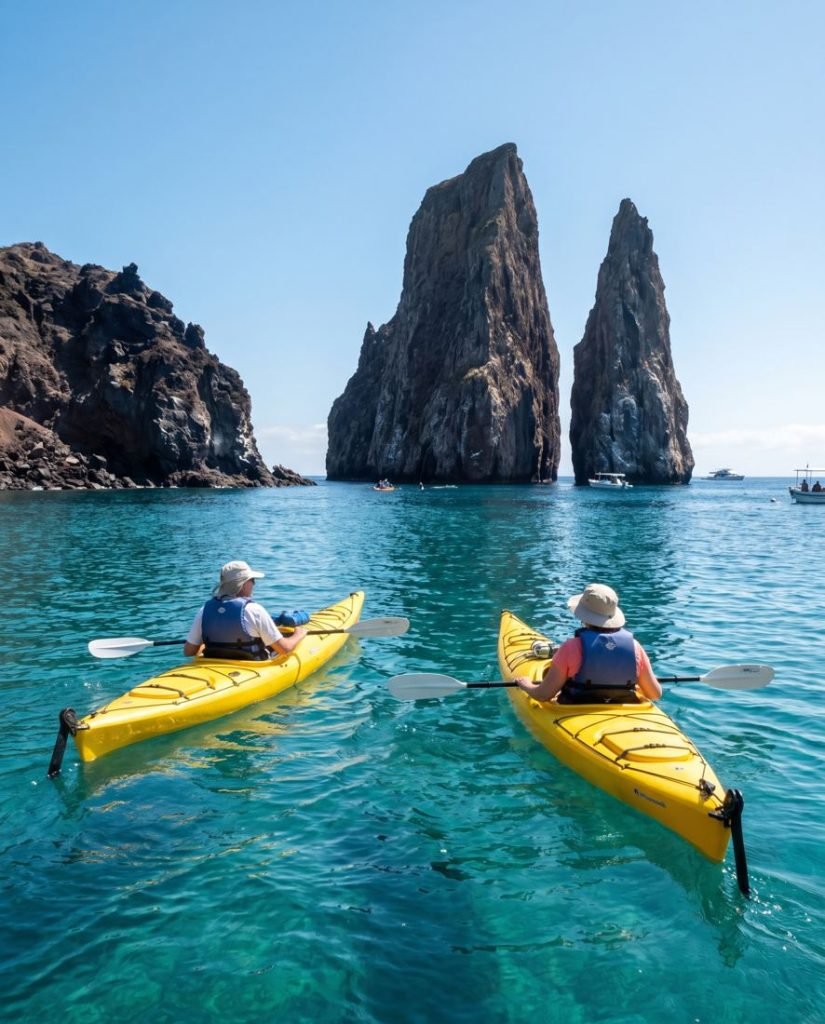
Kayak
Paddle clear coves beside volcanic sea stacks like Kicker Rock.
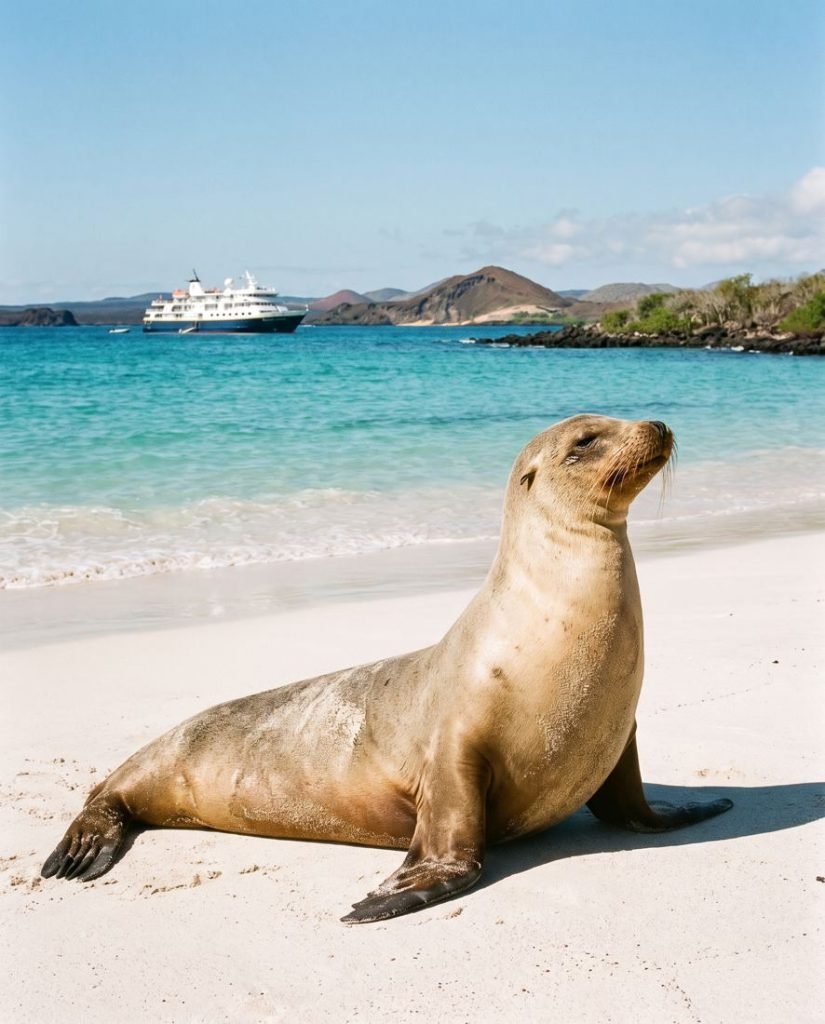
Photograph
Sea lions, frigatebirds and boobies that pose without being asked.
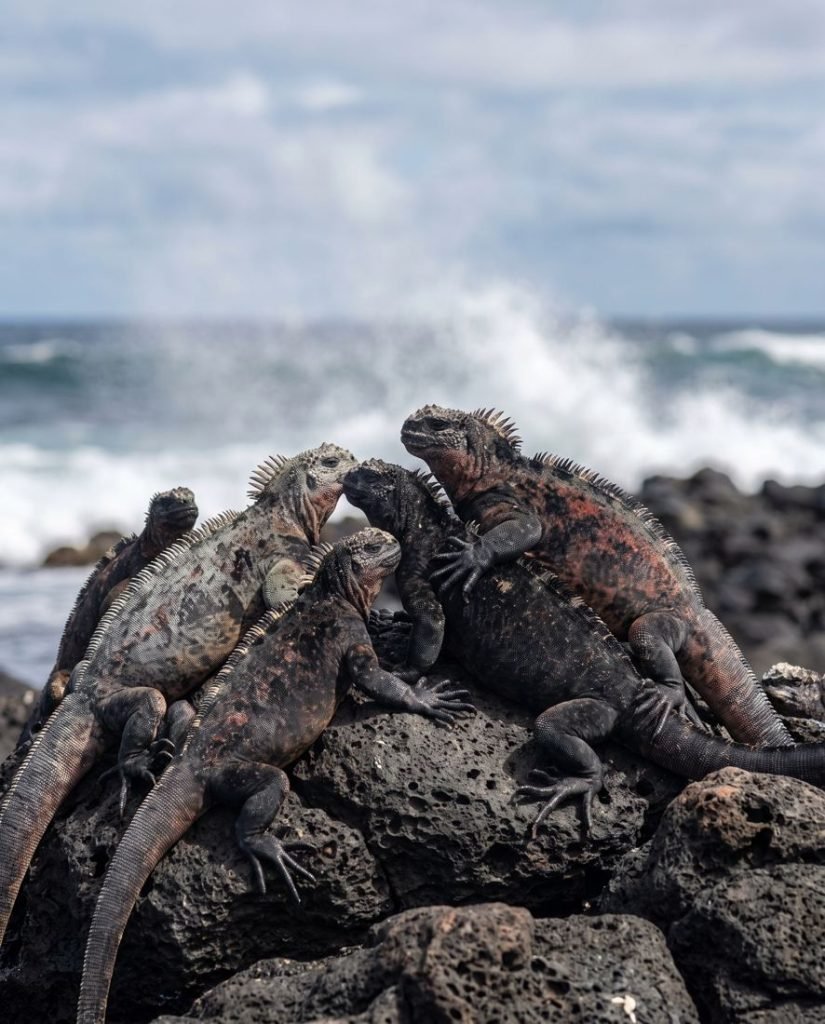
Explore
Walk black lava fields where marine iguanas sunbathe in heaps.
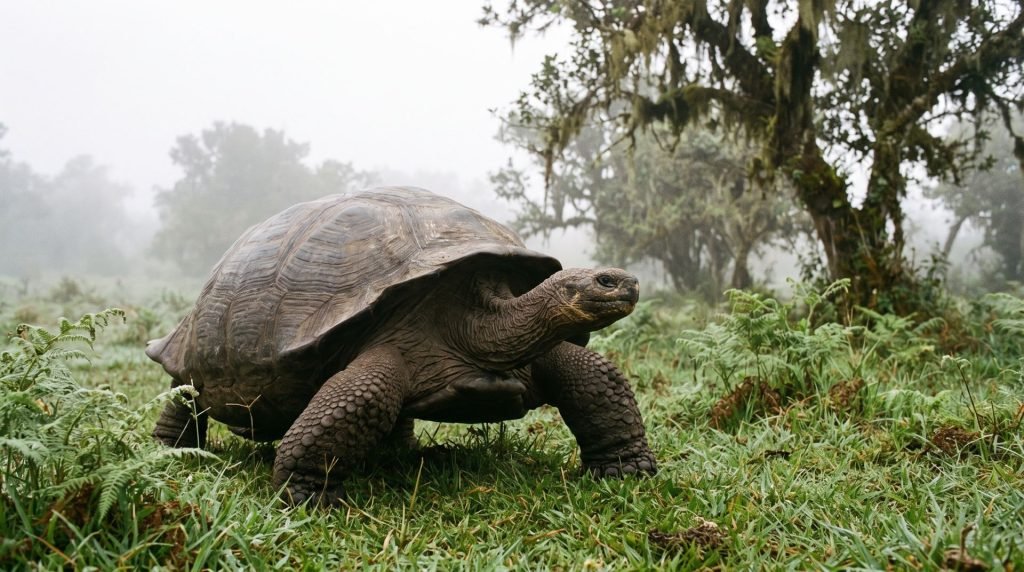
Learn
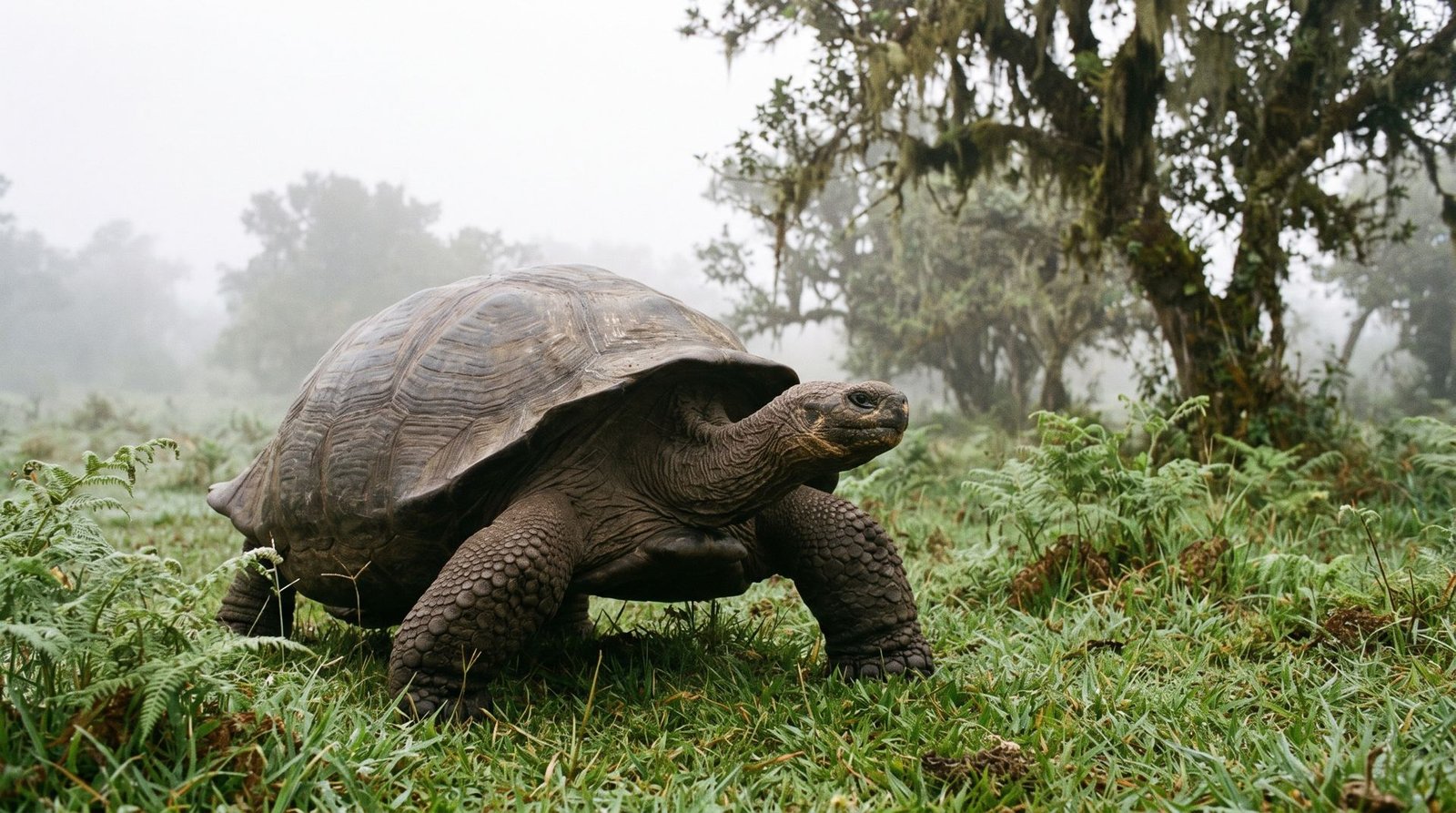
Meet the giant tortoises in the misty highlands of Santa Cruz.
Been there
Kevin sailed the Galápagos in June 2022
Kayaking at Santa Cruz, boarding the ship, and an interview with the captain. Watch the whole trip on our YouTube channel.
Getting there
Flights leave mainland Ecuador, from Quito or Guayaquil, for the islands’ airports on Baltra and San Cristóbal. Most visitors then join a small ship, or stay on one of the inhabited islands and take day trips.
Leave no trace
The islands are a national park, so visits follow strict rules: stay on the marked trails, keep your distance from the wildlife, and take nothing home but photos. Some giant tortoises here are more than 100 years old; the idea is that they get to keep going.